
7Sep, 2022

Minister of Public Service Hon. Joe Sungi, MP receiving a welcome gift from the Chairman of the Public Services Commission Mr. Apeo Fuata Sione.
PSC CHAIRMAN WELCOMES PUBLIC SERVICE MINISTER INTO OFFICE
7/09/2022
The Chairman of the Public Services Commission Mr. Apeo Fuata Sione officially welcomed the Minister for Public Service Hon. Joe Sungi, and congratulated him on his re-appointment as the Member for Nuku and also as Public Service Minister, in a ceremony held at the Pacific Institute of Leadership and Governance, that was organized by the Department of Personnel Management, PILAG, and PSC.
Mr. Sione in his speech said the Commission envisions a cordial working relationship with the Minister in order to deliver on the government’s agenda on Public Sector Reforms as outlined under the Loloata Accords and to implement the Commissions programs and projects in its Corporate Plan 2019 – 2023.
“We had a good cordial working relationship with you as we endeavored to implement the government’s agenda on the Public Sector Reforms”, said Mr. Sione.
The Chairman further added that PNG is going through some difficult and rapid socio-economic and socio-cultural changes that have never been experienced before, therefore PSC, just like PILAG and DPM will need to manage these changes in order to take advantage of the opportunities presented to it to develop an efficient public service mechanism that will provide quality service to our people.
‘’The Commission through its Corporate Plan 2019-2023 will uphold its Constitutional mandated roles and functions, corporate goals, values, and integrity to promote the principles of good governance, accountability, and transparency to ultimately achieve its vision to transform the National Public Service into a vibrant, effective and efficient service delivery machinery”, said Mr. Sione.
The Chairman further reiterated that under Minister Sungi’s political leadership going forward, PSC will continue the working relationship it has with sister organizations, DPM and PILAG, to bring about an efficient and vibrant public service system that the people of Papua New Guinea will benefit from.
Ends//

20May, 2025
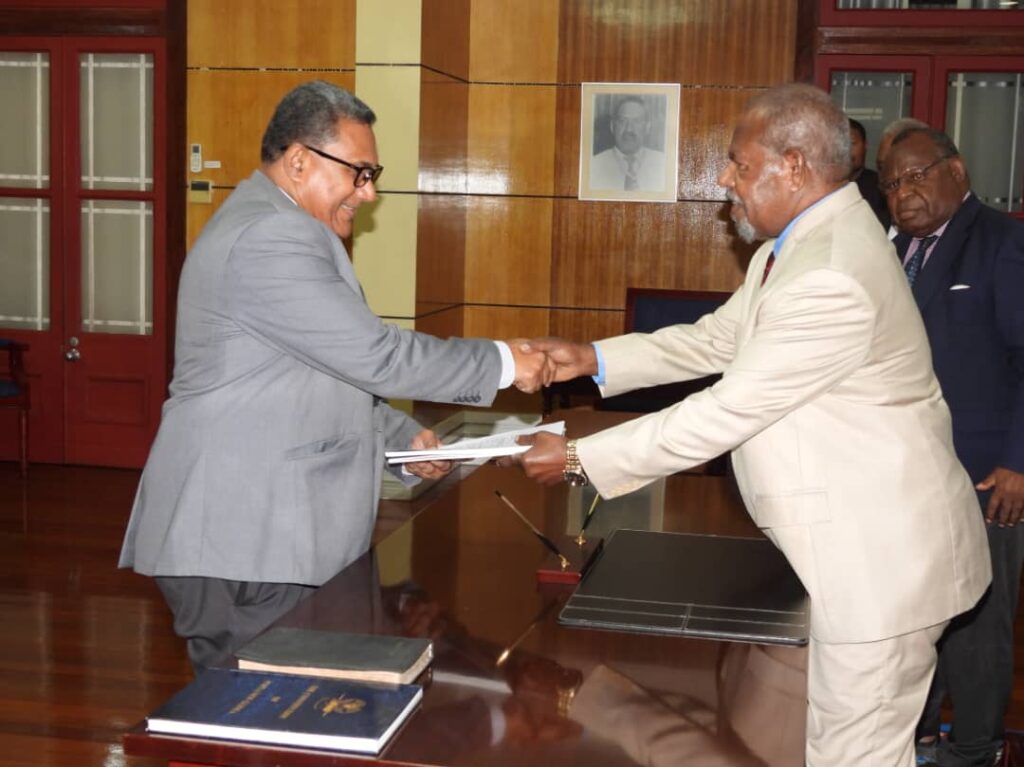
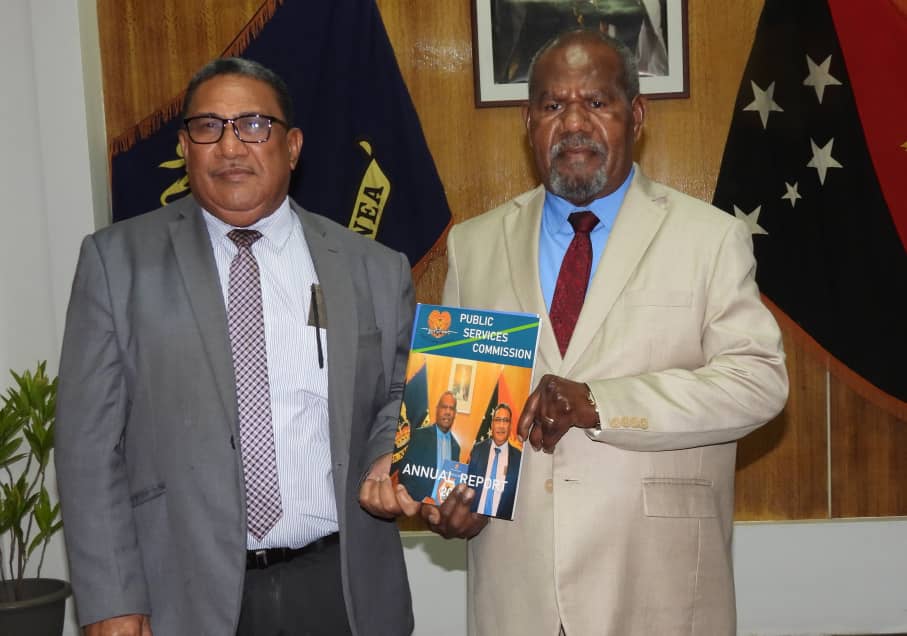
Public Services Commission Presents 2022 and 2023 Annual Report to the Governor General
The Public Services Commission (PSC) today formally presented its Annual Reports for the years 2022 and 2023 to the Governor General, Grand Chief Sir Bob Bofeng Dadae, during a ceremony held at Government House.
Chairman of the Public Services Commission, Mr. Apeo Fuata Sione, L.M, M. PP, presented the reports, reaffirming the Commission’s commitment to transparency, accountability, and good governance in the public sector.
The 2022 and 2023 reports provide a detailed overview of the Commission’s operations, its key achievements, and the challenges faced over the past two years. Mr. Sione said that these reports are not only a statutory obligation, but a critical tool for public accountability.
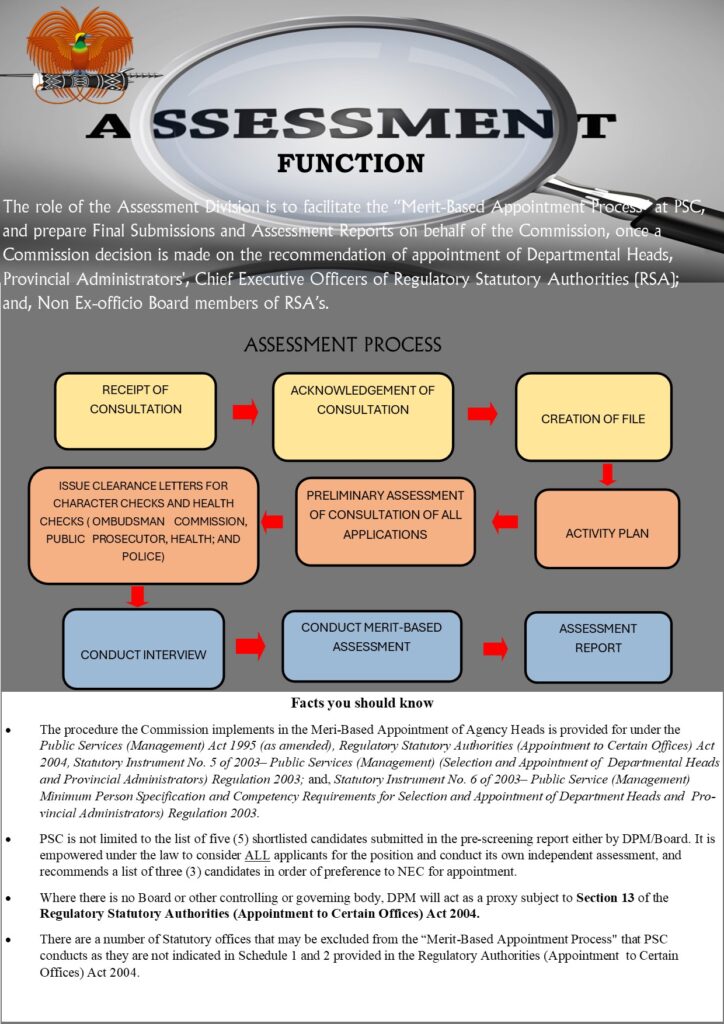
The reports also detailed the PSC’s ongoing digital transformation initiatives, aimed at improving operational efficiency in the roles and functions it performs in the public service.
In line with statutory requirements under Section 191 (4) of the National Constitution and Section 17(1) of the Public Services (Management) Act 2020, the reports will be presented to Parliament through the Office of the Governor General. They will also be made accessible, via the Commission’s website and office to encourage broader public engagement.
15May, 2025
PSC IT MANAGER UPSKILLS THROUGH ITIL 4 COURSE TRAINING TO ENHANCE THE COMMISSION’S IT INFRASTRUCTURE
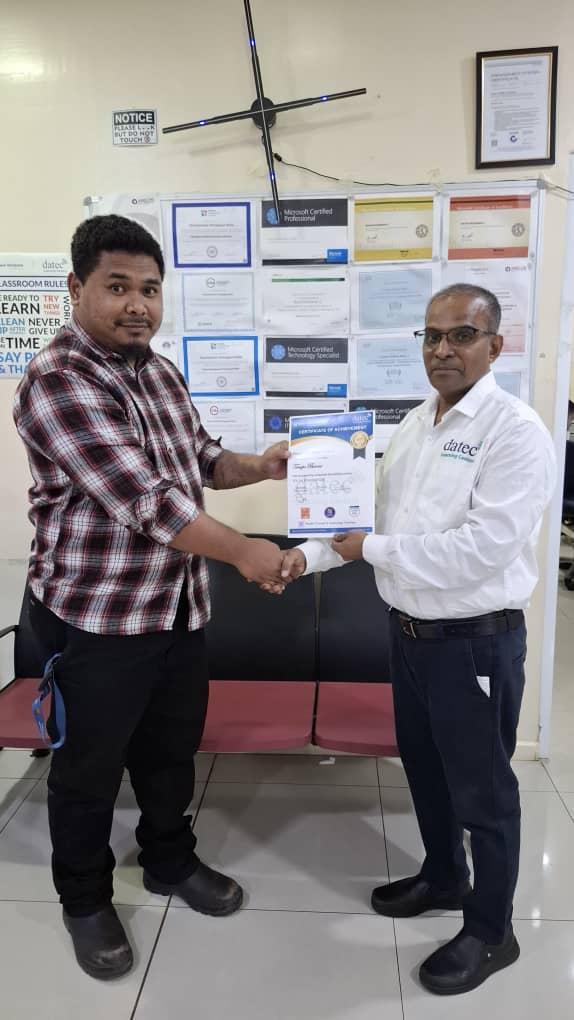
The Public Services Commission (PSC) continues its commitment to digital transformation and professional excellence, as IT Manager, Mr. Terupo Boone, recently completed the Information Technology Infrastructure Library (ITIL) 4 course training at the Datec Learning Centre in Gordons, from April 23rd – April 25th, 2025.
The Information Technology Training Infrastructure Library is the internationally recognized framework for IT Service Management (ITSM), equipping IT professionals with best practices to deliver high-value, business-aligned IT services.
Reflecting on the training, Mr. Boone said the course offers a practical roadmap for improving service quality, managing risk, and aligning IT operations with strategic public service goals.
“ITIL 4, enables me to implement standardized processes, foster continual improvement, and enhance collaboration across departments. It’s about ensuring the Commission’s IT services support our mission of public service excellence”, he said.
Key components covered in the course, included:
• The Service Value System (SVS) – showing how all parts of an organization work together to create value.
• Guiding Principles – like “focus on value” and “keep it simple and practical”.
• Core Practices – such as incident management, change enablement, and continual improvement.
Mr. Boone further acknowledged PSC’s support in enabling this professional development opportunity.
“I am grateful to PSC for investing in staff training that not only enhances our skills, but also our ability to deliver impactful results in the role we perform for the organization,” he said.
This achievement not only marks a personal milestone for Mr. Boone, but also reflects the PSC’s broader vision of fostering a future-ready workforce, one that embraces innovation, strengthens service delivery, and upholds the highest standards of public sector performance.
29Apr, 2025
PSCs’ ADMINISTRATIVE ASSISTANTS ATTEND INTERNATIONAL ADMINISTRATIVE PROFESSIONAL SUMMIT
By PSC Media
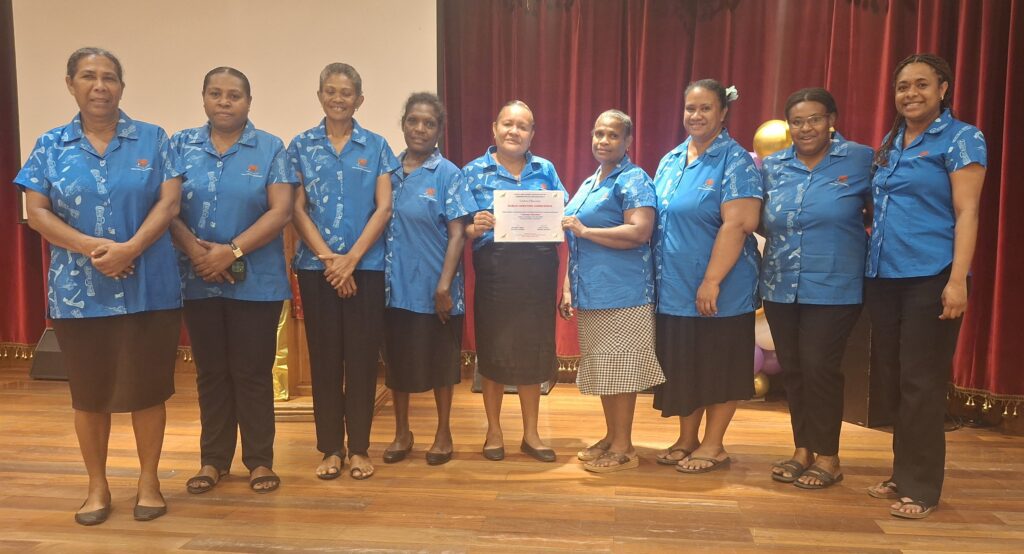
The Public Services Commission (PSC) is proud to acknowledge nine (9) of its Administrative Assistants who received Certificates of Appreciation for their active participation in the International Administrative Professional Summit, hosted by the Papua New Guinea All Admin Professionals (PNGAAP) on Thursday, 17th April 2025, at Dynasty Seafood Restaurant, in Port Moresby.
This significant event brought together administrative professionals from a broad range of backgrounds, including government departments, state agencies, and the private sector, to share experiences, build professional networks, and highlight the evolving role of administrative staff in modern workplaces.
The summit was held under the theme ‘Gender Bender’, with key topics focusing on:
• Recognition of professional skills through embracing diversity, inclusivity, and equality;
• Celebrating the character and contributions of administrative professionals;
• Understanding challenges related to traditional gender roles and workplace expectations;
• Encouraging continued professionalism and excellence within the field.
Ms. Noho Daera, Acting Personnel Assistant to the Office of the Secretary, PSC Secretariat, spoke on behalf of the team, sharing her reflections on the summit’s impact saying it is important to create a network between administrative professionals in the public sector.
“This enables us to work in unison and also helps us to carry out our duties and responsibilities with the knowledge and skills attained from being part of this Association. Therefore, moving forward, it is recommended for our participation in future training and conferences organized by the PNGAAP”, said Ms. Daera.
The PNGAAP continues to play a vital role in promoting the professional and social welfare of administrative personnel across PNG, and is committed to fostering a culture of learning, excellence, and empowerment for office professionals.
This year, the PSC proudly registered ten (10) Administrative Assistants and one (1) Receptionist as official members of the PNGAAP. This affiliation not only opens doors to further professional development, but also aligns with the Commission’s commitment to capacity building and career advancement.
The officers who attended the summit expressed their sincere gratitude to the PSC, for its ongoing support and for recognizing the value of such opportunities in enhancing their skills, confidence, and contribution to the public service.
18May, 2023
PSC OFFICERS ATTEND INVESTIGATIVE TRAINING
By Nadia. Marai
The European-funded project ‘’ Preventing and Countering Corruption in Papua New Guinea’’ which is implemented by the European Union and United Nations Office of Drugs and Crimes (UNDOC) recently ran a week of training on investigations of administrative complaints for practitioners working in the area of integrity and anti-corruption, entrusted with or interested in investigations of administrative complaints which included the Public Services Commission. The training was conducted by UNDP’s Anti-Corruption specialists in partnership with the Department of Attorney General.
Fifteen (15) officers from PSC attended the training to broaden their skills and knowledge in the area of conducting administrative investigations.
Bonstein Igime who is a Review officer with the National Review Division was one of the officers that attended the training from the 2nd to the 5th of May 2023, at the Gateway Hotel in Port Moresby.
‘’ We were given advanced training on investigations of administrative complaints. Basically, during those 3 days, we learned about how to eliminate risks leading to administrative complaints, how to investigate administrative complaints in theory and in practice, and finally how to fight corruption and fraud in the public sector in practice’’ said Mr. Igime.
He said on the last day the training was specifically on corruption risk assessment and management. ‘’ During that session, we learned about how to identify and assess key corruption risks, how to develop specific plans to address each of these key corruption risks, how to implement these plans, and finally how to ensure regular monitoring of implementation.’’
Each of the days’ training was designed to provide awareness and knowledge to key practitioners who are working in institutions of integrity and anti-corruption and are dealing with investigations of administrative complaints. Presentations centered around basic theoretical knowledge, combined with extensive practical exercises (case studies, role-playing, etc…) putting current regulations into a practical context and reviewing alternative ways of addressing the existing challenges.
The training is the advanced continuation of basic training on the investigation of administrative complaints that is funded by the EU and co-organized by UNDP and DJAG within the PNG Anti-Corruption Project in October 2022 in Port Moresby. The focus of advanced training is on the practical application of knowledge.
Mr Igime said the training was very important for him as well as a first-time Review officer for PSC.
‘’It’s very important to understand and appropriately apply the proper investigative techniques to effectively deal with administrative complaints within the public sector. To establish preventive and pre-emptive measures to carefully identify corruption risks and to effectively deal with them and thereafter establish evaluation and monitoring processes to neutralize these corruption risks.’’
Mr. Igime added that we should do our job with pride and utmost professionalism in order to help eradicate corruption and negative practices and stigma from the public sector in PNG. PNG is slowly improving as indicated in the recent reports from the global corruption index and although it is a promising sign of good things to come, the improvements we are making are still at a snail’s pace. Therefore, it’s imperative that all officers from the different government agencies and departments around the country should work in a collective manner with a strong intent, purpose, and objective to significantly reduce and neutralize corruption in our country.
Image: Officers of PSC who attended the training alongside Interim Chairman for ICAC Mr Thomas Eluh (Seated 2nd from right) with the trainers from UNDP Mr Drago Kos and Almar Sedlar.
